
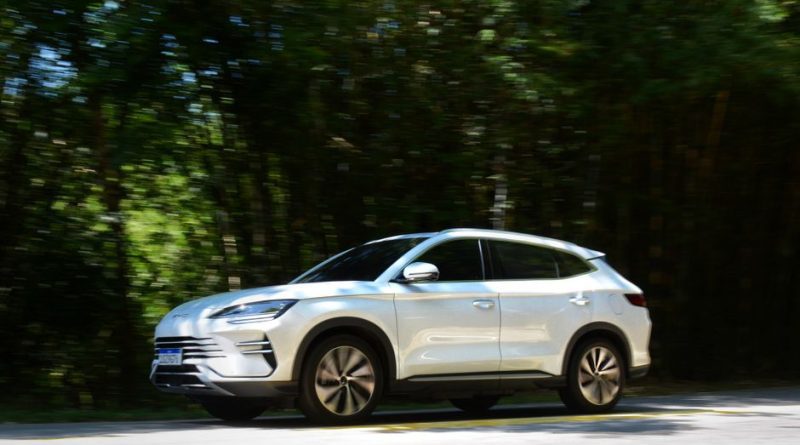
BYD’s New Tang SUV Targets Luxury Segment, Poising Pressure on BBA Brands in China
BYD’s New Tang SUV Targets Luxury Segment, Poising Pressure on BBA Brands in China
BYD, China’s leading electric vehicle manufacturer, has officially unveiled its latest iteration of the Tang SUV, positioning it as a formidable contender in the premium segment. Priced around 400,000 RMB (approximately $55,000 USD), the new Tang aims squarely at traditional luxury stalwarts, notably challenging the dominance of Germany’s “BBA” brands—BMW, Mercedes-Benz, and Audi—within the burgeoning Chinese market.
The launch of the new Tang signifies BYD’s intensified ambition to capture a larger share of the high-end automotive landscape. With its sleek design, advanced intelligent features, and robust electric powertrain, the Tang is engineered to appeal to discerning consumers who traditionally gravitate towards established luxury marques. Reports indicate that the vehicle boasts cutting-edge autonomous driving capabilities, a sumptuously appointed interior featuring premium materials, and impressive performance metrics that include rapid acceleration and substantial range. The vehicle is expected to leverage BYD’s latest Blade Battery technology, ensuring superior safety and energy density, further cementing its appeal.
BYD’s strategy with the 400,000 RMB price point is to offer a compelling value proposition that combines luxury, technology, and electric performance at a competitive price, potentially swaying BBA owners seeking an innovative, domestically produced alternative without compromising on prestige or quality. This move underscores a broader trend in China, where local EV brands are increasingly challenging foreign incumbents across various market segments, leveraging technological prowess and a deep understanding of local consumer preferences.
What This Means for the Global Market
This assertive move by BYD into the premium SUV segment directly impacts global luxury automakers, particularly Tesla and European brands, by intensifying competition in one of the world’s most lucrative EV markets. As Chinese brands like BYD demonstrate their capability to deliver high-quality, technologically advanced, and desirable premium vehicles, it signals a potential shift in global automotive perceptions and export opportunities. This could force established international players to accelerate their innovation cycles and re-evaluate their pricing strategies to maintain market share, both within China and potentially in other international markets where BYD is expanding.